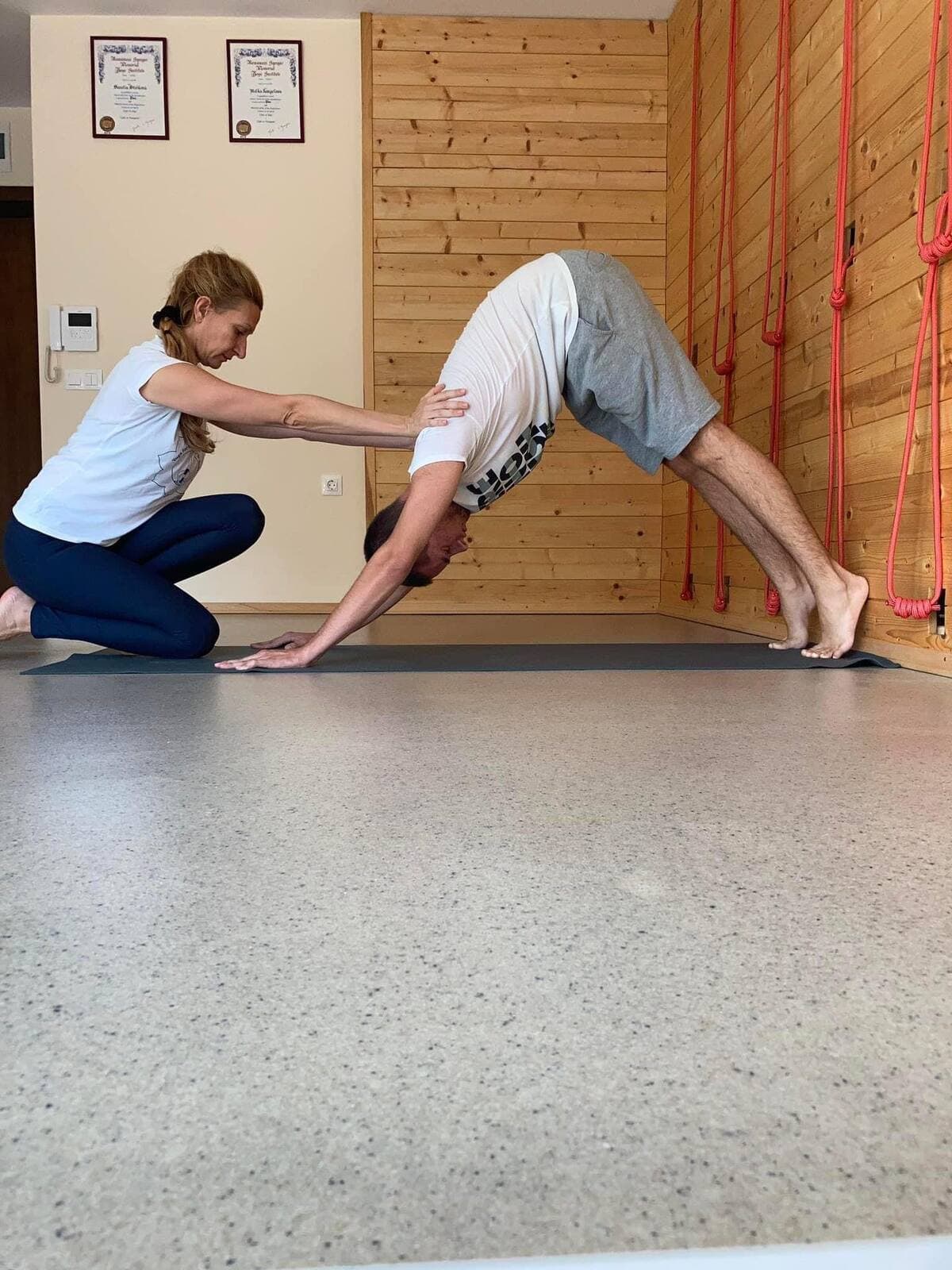
Inversions in Iyengar Yoga: Overcoming Fear and Building Strength
Why inversions matter in yoga
Inversions — where the head goes below the heart — are considered the crown jewels of yoga practice. Sirsasana (headstand) and Sarvangasana (shoulderstand) are not just impressive poses; they profoundly affect the nervous, circulatory, and endocrine systems. B.K.S. Iyengar called Sirsasana the king and Sarvangasana the queen of all asanas.
How props make inversions safe
In Iyengar yoga, we never rush students into inversions. Props are essential: wall ropes provide security and reduce fear of falling, chairs support the body in shoulderstand variations, and blankets protect the neck. This approach means you experience the benefits of being inverted long before you can hold a freestanding headstand.
From beginner to advanced — a clear progression
Beginners start with simple inversions like Adho Mukha Svanasana (downward-facing dog) and Viparita Karani (legs up the wall). From there, we progress to supported Sarvangasana using a chair, then Sirsasana at the wall with ropes. Each stage builds the strength and confidence for the next. Some students reach full inversions in months; others take years — and both paths are valid.
The physical and mental benefits
Physically, inversions reverse the effects of gravity on the body, improve circulation, reduce leg swelling, and strengthen the upper body and core. Mentally, the shift in perspective is remarkable — there is a clarity and calm that comes from being upside down. Many of my students say inversions changed their relationship with fear itself.
Frequently Asked Questions
I'm afraid of going upside down. Can I still do inversions?
Absolutely. Fear is normal and expected. In Iyengar yoga, we address fear systematically through props and gradual progression. Wall ropes and the support of a teacher mean you're never in danger. Most students find their fear diminishes significantly within a few weeks of supported practice.
Are inversions safe for people with high blood pressure?
Full inversions like headstand are generally not recommended for uncontrolled high blood pressure. However, gentler inversions like legs up the wall or supported bridge pose may be suitable. Always consult your doctor and inform your teacher about your condition before practicing inversions.
How long before I can do a headstand?
It varies widely. Some students achieve supported headstand within a few months; others need a year or more. The timeline depends on upper body strength, core stability, and comfort with being inverted. In Iyengar yoga, there's no rush — you benefit from every stage of the progression.