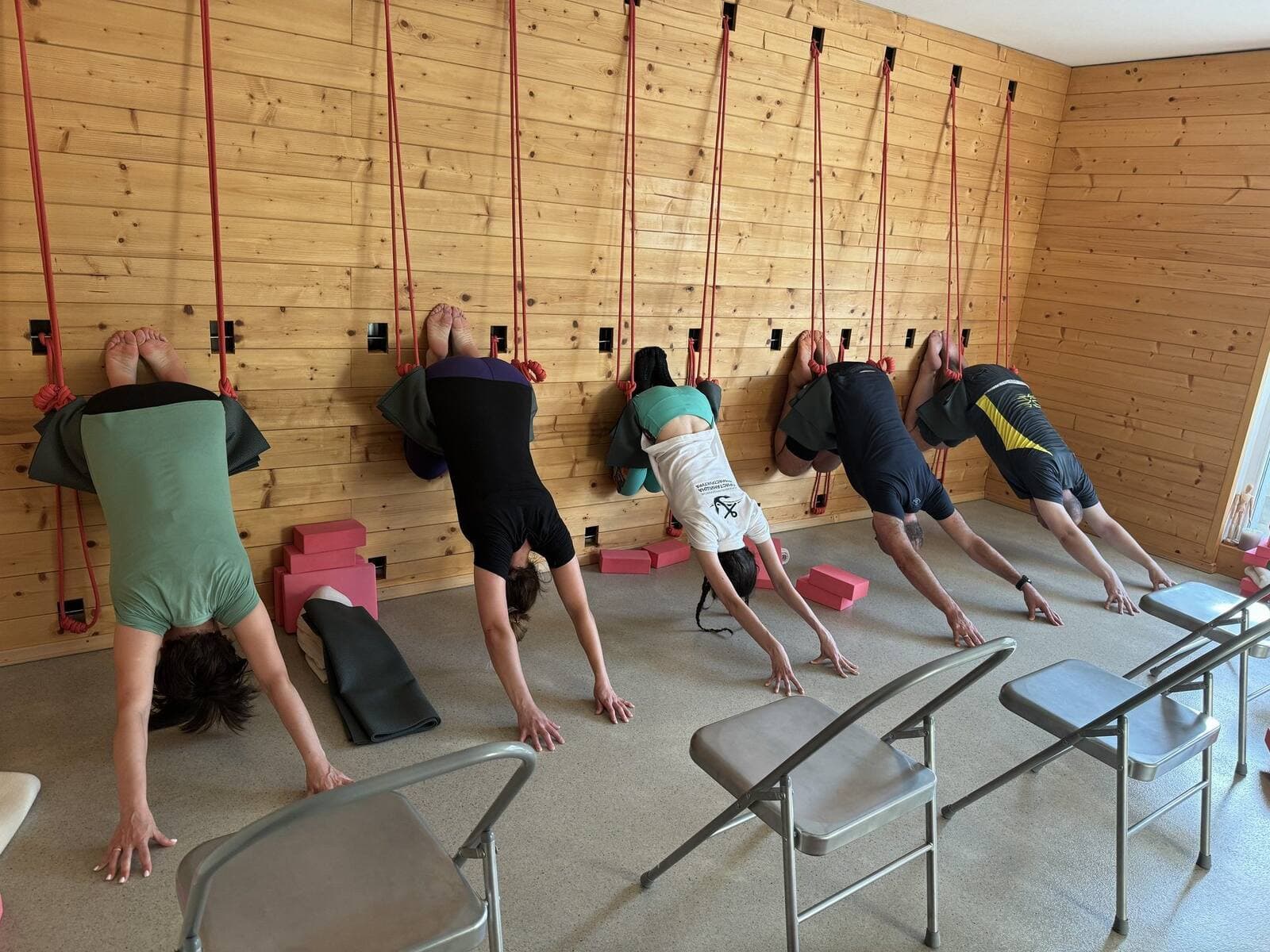
Yoga After 40: Why It's Never Too Late to Start
The body after 40 — what changes
After 40, the body begins to lose muscle mass, joints become less mobile, bone density decreases. This isn't inevitable — it's the natural result of not using what we have. The good news: this is entirely reversible.
How Iyengar yoga addresses these changes
For declining muscle mass — standing poses build strength in legs, core, and upper body. For joints — supported backbends and gentle twists restore mobility. For balance — standing poses and inversions activate stabilizing muscles. For bone health — weight-bearing poses strengthen bones naturally.
Real stories from my students
Milena, 52, came with a herniated disc and couldn't stand straight for more than 10 minutes. After six months of regular practice, she can stand, walk, and work all day. She says: "I feel like I got my body back."
How to start after 40
The first step is accepting that you don't need to be flexible to practice yoga — that's like saying you need to be rich to learn about money. You practice yoga to develop these qualities, not because you already have them.
Menopause and yoga
Menopause transformed my perspective on yoga's therapeutic power. Several of my students experienced menopausal transitions, and yoga eased their journeys dramatically. Hot flashes decrease with regular practice—even without understanding exactly why, hormonally-based symptoms respond to consistent yoga. Forward bends and gentle twists calm the nervous system, reducing anxiety surrounding hormonal fluctuations. I emphasize cooling pranayama practices—long exhalations and Sitali breath—during menopause-focused classes. Supported backbends help with mood and energy shifts. Restorative poses address sleep disruption common during menopause. Weight distribution often changes during menopause; yoga's functional strength helps maintain health during this transition. I avoid overheating practices for menopausal students, preferring gentler intensity. The philosophical aspect matters too—yoga teaches accepting body changes rather than fighting them. Menopause needn't be crisis; with support, it's transformation. Several menopausal students reported that yoga made menopause manageable where medication alone hadn't.
Osteoporosis and bone density
After 40, bone density decreases, especially in women approaching or in menopause. Iyengar yoga's weight-bearing poses—standing poses, backbends—stimulate bone formation. Research suggests regular yoga practitioners maintain better bone density than sedentary peers. Standing poses like Warrior poses require legs to support body weight against gravity, stimulating osteoblasts (bone-building cells). Backbends engage the spine directly, addressing osteoporosis risk in the vertebral column. I emphasize proper alignment in weight-bearing poses—forcing alignment damages bones while precise positioning protects and strengthens them. Osteoporosis requires caution: avoid forward folds and twists that compress vulnerable spines. Instead, focus on supported backbends and standing poses. Women with diagnosed osteoporosis should practice with certified teachers experienced in therapeutic yoga. My 68-year-old student with early osteoporosis noticed improved bone density after two years of consistent Iyengar practice combined with adequate calcium intake. Weight-bearing yoga isn't a cure, but it's preventive medicine.
Balance and fall prevention
After 60, falls become serious health risks. Hip fractures from falls often mark the beginning of declining independence. Balance yoga significantly improves proprioception and strength, reducing fall risk. Standing poses like Tree Pose and Warrior Poses challenge balance while building leg strength preventing falls. Core strengthening poses protect your spine if falls occur. I regularly see older students gain confidence and stability through balance-focused practice. One student, 72, feared climbing stairs after a fall. After six months of balance work, she climbed confidently again. Proprioceptive training—understanding where your body is in space—naturally improves through yoga's precise alignment demands. Eyes-closed variations deepen balance challenges safely. Combining Iyengar yoga with strength training and flexibility work creates comprehensive fall prevention. Regular practice doesn't guarantee you'll never fall, but it dramatically reduces likelihood and consequences. For anyone over 50, fall prevention deserves serious attention. Yoga addresses this better than most interventions.
Yoga for mental health after 40
The second half of life brings unique stressors—aging parents, career transitions, identity shifts. Yoga supports mental health powerfully during these transitions. Regular practice reduces anxiety and depression markers comparable to some medications. The nervous system regulation that yoga creates helps manage stress without pharmaceutical side effects. Meditation deepens in adulthood—people over 40 often practice meditation more effectively than younger students because life experience teaches perspective. Pranayama directly influences nervous system function; specific breathing patterns activate calming parasympathetic responses. I've noticed older students find peace in yoga that younger, busier students sometimes chase frantically. Sleep quality improves significantly with consistent practice—vital since sleep disruption increases after 40. Cognitive function benefits from yoga; research suggests it supports memory and mental clarity. The community aspect matters too; group classes provide social connection protecting against isolation. For anyone navigating the meaningful challenges of midlife and beyond, yoga offers practical tools for mental wellbeing alongside physical health.
Frequently Asked Questions
Is yoga safe with osteoporosis?
Yes, with modifications. Avoid deep forward bends and intense twists that compress the spine. Focus on supported backbends, standing poses, and gentle strengthening. Always inform your teacher about bone density concerns so they modify appropriately.
I'm 60—isn't it too late?
Absolutely not. I teach many students over 60 experiencing dramatic improvements. Starting now prevents further decline and often improves existing conditions. The body responds to movement and challenge at any age. You simply need appropriate progression and modifications.
Do I need medical clearance before starting?
For serious conditions—cardiac issues, high blood pressure, recent surgery—yes, obtain medical clearance. For general health, yoga is preventive medicine. Discuss with your doctor, especially if managing chronic conditions. Most doctors support yoga enthusiastically.
How many times per week should I practice after 40?
2-3 times weekly balances benefit with recovery needs. Consistency matters more than frequency—once weekly practiced regularly beats sporadic intense sessions. As you age, recovery between sessions becomes increasingly important for muscle repair.
I've never exercised—can I start yoga?
Yes, absolutely. Many never-exercising people find yoga's combination of strength, flexibility, and mindfulness perfect for beginning. Start with beginner classes and progress gradually. Your body adapts beautifully to consistent gentle challenge.