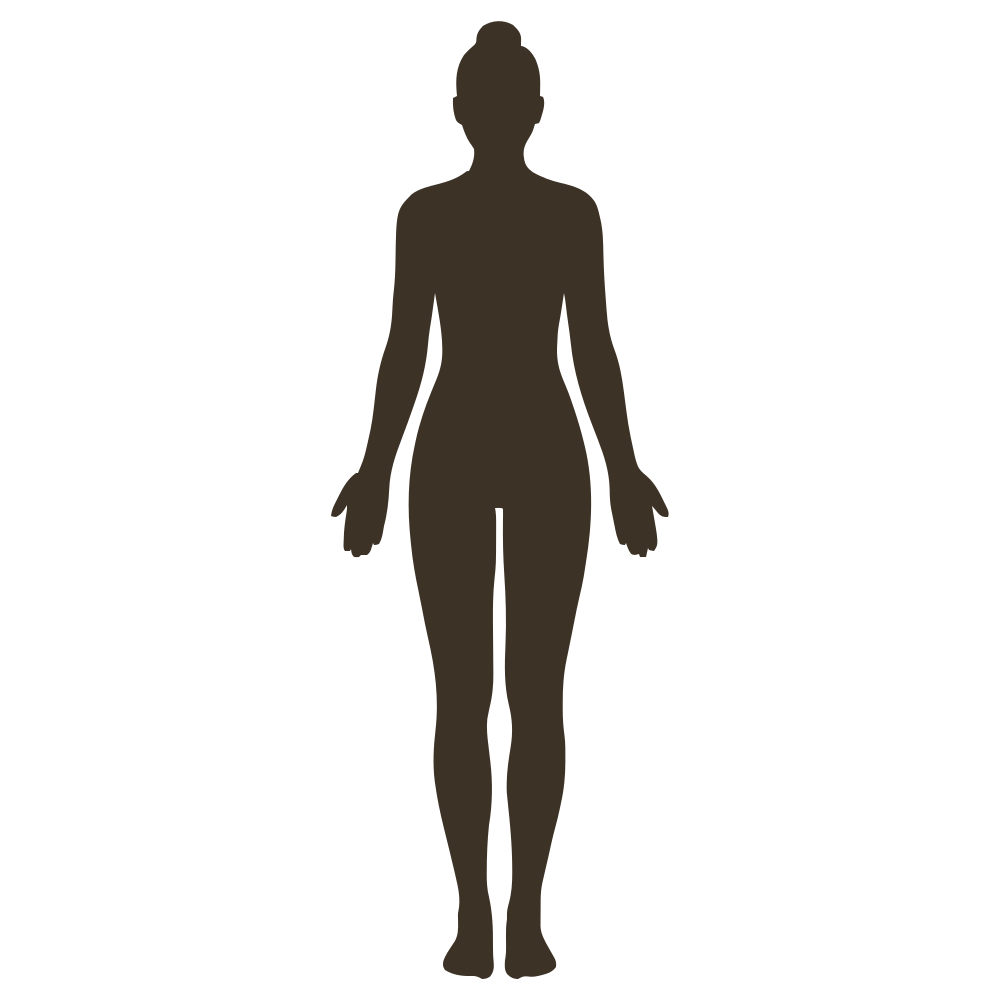
Tāḍāsana
Mountain Pose
Updated:
Benefits
- ✓Improves posture and builds awareness of whole-body alignment
- ✓Strengthens the thighs, knees, and ankles through even weight distribution
- ✓Tones the abdominal muscles and improves digestion
- ✓Calms the mind and develops concentration through focus on internal sensation
- ✓Creates a sense of stability and inner confidence
Instructions
- 1.
Foundation — the feet
Stand with the inner edges of the feet parallel and touching. Spread the toes and distribute the weight evenly between the heels and the balls of the feet. Press the three points of each foot down: the base of the big toe, the base of the little toe, and the center of the heel. Lift the arch of the foot without gripping the toes.
- 2.
The legs — activation and lengthening
Press the thigh bones back and lift the kneecaps upward by engaging the quadriceps. Direct the inner thighs slightly backward and the tailbone down toward the heels. Feel the energy rising from the feet upward along the inner legs.
- 3.
Pelvis and spine — upward extension
Level the pelvis — the frontal hip bones and the pubic bone should be in one plane. Lengthen the spine from the tailbone upward to the crown. Lift the side ribs without pushing them forward. Feel space between each pair of vertebrae.
- 4.
Arms and shoulders
Release the arms alongside the body with the palms facing inward. Rotate the upper arms outward to open the chest. Drop the shoulders down, away from the ears, and slide the shoulder blades toward the spine. Extend the fingers downward.
- 5.
Head and gaze — completing the pose
Keep the head in a neutral position — the chin parallel to the floor, the back of the skull directly above the center of the pelvis. The gaze is soft, directed forward. Breathe calmly and hold for 30–60 seconds, observing the sensation of rising from the feet to the crown.
Modifications & Props
Props needed
For beginners — with a block between the thighs
Place a block between the inner thighs and squeeze it gently inward. This activates the adductors and helps you feel the correct leg alignment. The block provides tactile feedback — if it shifts, the alignment has been lost.
For intermediate — with arms overhead (Urdhva Hastasana)
Raise the arms out to the sides and up to a vertical position with the palms facing each other. Pull the shoulders down while extending the arms upward. This deepens the work of the spine and shoulder girdle without changing the base.
With wall support
Stand with your back against the wall so that the heels, buttocks, shoulder blades, and the back of the head all touch it. The wall acts as a mirror for alignment. Try to create minimal space in the lumbar area — only as much as the natural curve of the spine requires.
⚠Contraindications
- •Low blood pressure — hold the pose briefly if dizziness occurs
- •Insomnia — avoid prolonged holding in the evening
Frequently Asked Questions
How long should I hold Tadasana?
In Iyengar practice, Tadasana is held for 30 seconds to 1 minute. More important than duration is the quality of presence — whether you feel the alignment in every part of the body.
Why is Tadasana considered the most important pose?
B.K.S. Iyengar said Tadasana is the "alphabet" of asanas. The alignment principles learned here — active legs, lengthened spine, open chest — transfer to every other pose. Without a strong foundation in Tadasana, more complex poses lose effectiveness.
Can I practice Tadasana during pregnancy?
Yes, Tadasana is safe during pregnancy. Widen the feet to hip-width for better balance. In later pregnancy, you can use a wall for support.