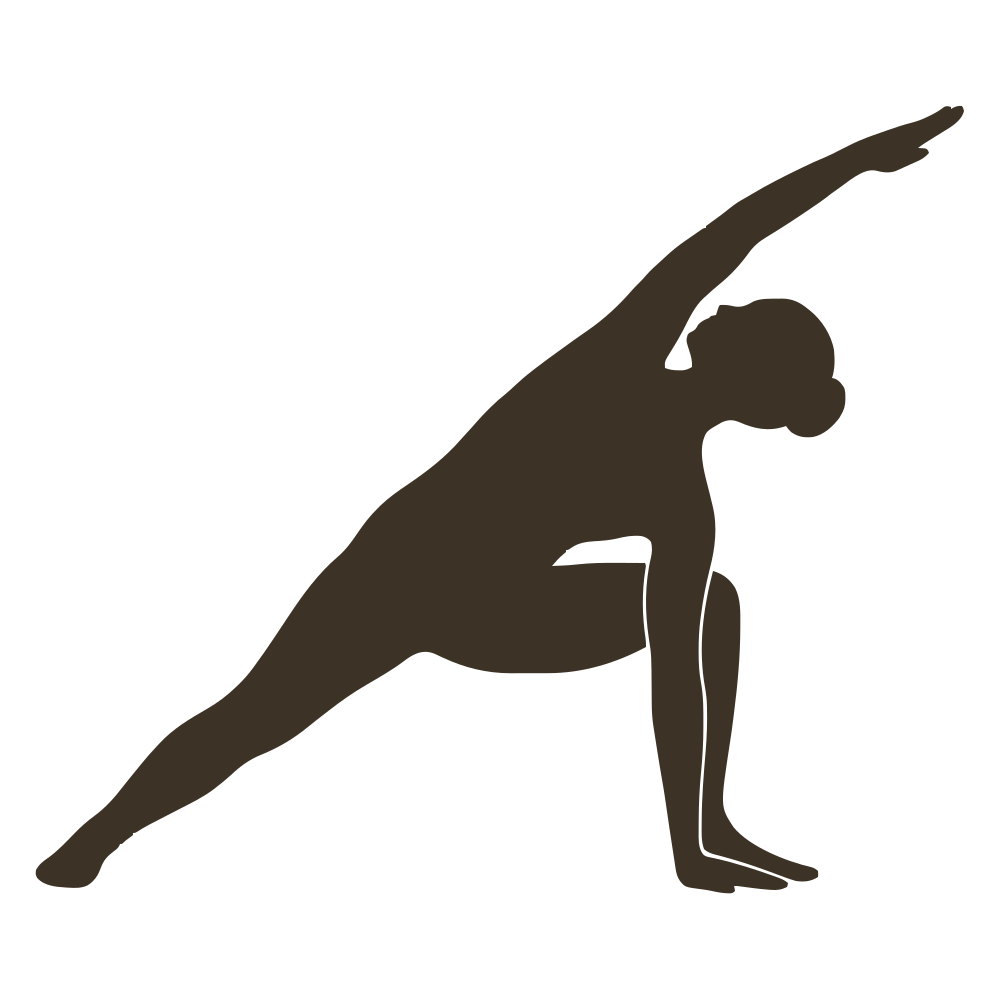
Utthita Pārśvakoṇāsana
Extended Side Angle Pose
Updated:
Benefits
- ✓Strengthens and stretches the legs, knees, and ankles
- ✓Stretches the groins, spine, waist, and shoulders
- ✓Stimulates the abdominal organs and improves digestion
- ✓Increases stamina and respiratory capacity
Instructions
- 1.
Starting position — as in Warrior II
Enter Virabhadrasana II with the right knee bent. Make sure the base is stable — knee directly above the ankle, back leg active, torso vertical. This stable foundation is mandatory before moving into the side bend.
- 2.
Lateral extension
On an exhale, incline the torso to the right, placing the right hand on the floor (or a block) on the outside of the right foot. The left arm extends over the ear, creating one unbroken diagonal line from the left foot to the left palm. Feel how the entire left side of the body stretches.
- 3.
Alignment and rotation
Rotate the chest upward toward the ceiling. Keep the back leg active and straight with firm pressure on the outer edge of the back foot. Do not allow the torso to fall forward — keep it in one plane with the legs. The shoulder blade of the upper arm draws toward the spine.
- 4.
Breathing and holding
Breathe deeply into the upper chest — feel how the inhalation opens the upper side of the body. Hold 20–30 seconds, gradually increasing to 1 minute. Exit by pressing the back foot and rising on an inhalation. Repeat on the other side.
Modifications & Props
Props needed
For beginners — elbow on the knee
Instead of placing the hand on the floor, rest the elbow on the front knee. Use the pressure of the elbow against the knee to rotate the torso upward. A block next to the foot is another good option that maintains the length of the torso.
For intermediate — with a belt
Attach a belt from the upper hand to the back foot. Pull the belt with the upper hand to intensify the rotation of the torso and the opening of the chest. The belt serves as an arm "extender" and helps you find the full range of motion.
With wall support
Place the back foot and buttocks against the wall. The wall helps you maintain the correct plane of the body and prevents falling forward. Use it as a reference for the rotation of the torso.
⚠Contraindications
- •Low blood pressure — come out of the pose slowly
- •Insomnia or headache — practice with shorter holds
- •Knee injury — do not bend the front knee beyond 90°
Frequently Asked Questions
What is the difference between Trikonasana and Parsvakonasana?
In Trikonasana both legs are straight, while in Parsvakonasana the front leg is bent at 90°. Parsvakonasana works more intensely with the groins and hips and requires more leg strength. Both stretch the lateral line but at different angles.
My shoulder is straining. How do I ease it?
Place the top hand on the hip instead of extending it. When the shoulder opens enough, gradually extend the arm upward and then over the ear. Never force it — the shoulder girdle opens gradually with regular practice.